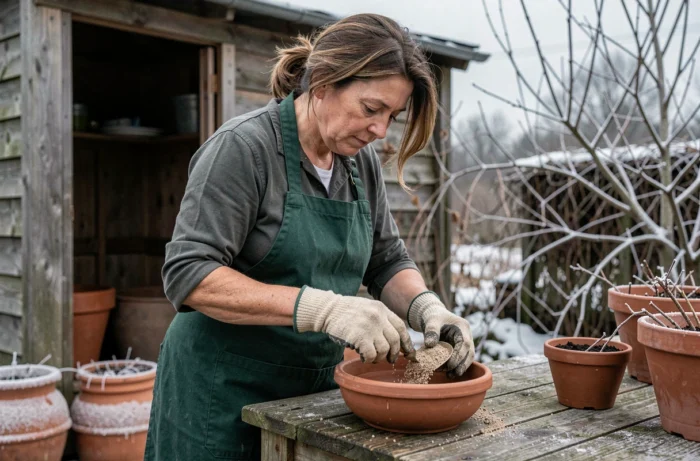
A winter fertilizer mix is not just about spreading compost before the frost. The composition of the substrate, the ratio of nutrients, and the form of release determine whether your plants will survive the winter with sufficient reserves or emerge weakened in the spring.
Flushing the substrate before winter fertilization: an overlooked step
Before any application of autumn fertilizer, we recommend flushing the substrate to remove accumulated salts. Running plenty of warm water through the pot and then allowing it to drain completely helps dislodge residues from summer fertilization. These salts, concentrated by months of watering, weaken the roots when the plant enters its vegetative dormancy.
In open ground, the problem is less pronounced due to natural drainage. However, for potted plants, this salt accumulation can cause root burns that are invisible on the surface. Flushing creates a neutral substrate, ready to receive a calibrated winter supply.
To delve deeper into the topic, several winter tips on Envies de Jardin detail the appropriate dosages for different soil types.
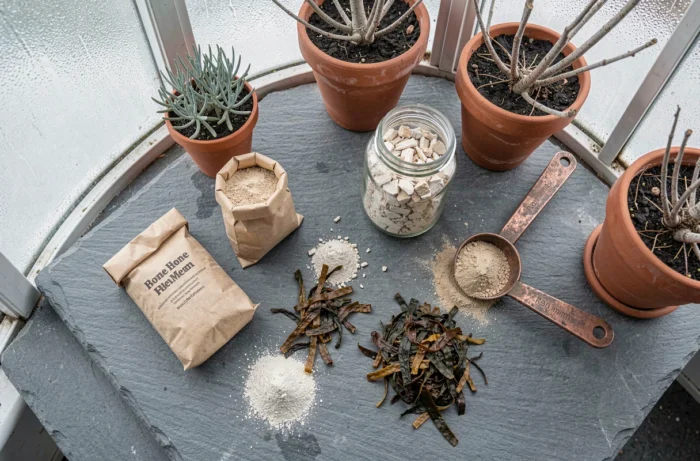
NPK ratio suitable for vegetative dormancy: potassium dominant
The classic mistake is to apply the same balanced fertilizer in autumn as in spring. During dormancy, nitrogen becomes a risk factor: it stimulates tender leaf growth, vulnerable to frost. Phosphorus plays a moderate role in root development. Potassium, on the other hand, strengthens cellular resistance to cold.
We favor a ratio where potassium (K) is the dominant fraction. An NK-type fertilizer with very little phosphorus is suitable for established shrubs and perennials. For fruit trees, phosphorus can be slightly more present to support reserve buildup.
Organic or mineral fertilizer for winter
A slow-release organic fertilizer (ground horn, patentkali, bone meal) decomposes gradually thanks to the microbial activity in the soil, even when slowed by the cold. The slow release avoids nitrogen spikes at the wrong time. A soluble mineral fertilizer, on the contrary, makes its nutrients available immediately, increasing the risk of leaching from winter rains.
For potted plants, the organic form has an additional advantage: it nourishes the substrate without drastically altering its electrical conductivity, which is already weakened if flushing has not been done.
Composition of a winter mix for clay or sandy soil
The nature of the soil dictates the mix. Clay soil retains nutrients well but compacts under rain. Sandy soil allows fertilizing elements to wash away with winter drainage. The fertilizer mix must compensate for these characteristics, not ignore them.
- Clay soil: a combination of mature compost (improves structure) with a potassium supply like patentkali, without adding fast nitrogen. Mulching with fallen leaves completes thermal protection.
- Sandy soil: a mix of well-decomposed composted manure and roasted horn to slow down release. Adding a thick layer of mulch limits nutrient erosion from rain.
- Silty soil: a supply of compost alone is often sufficient, supplemented with a potassium fertilizer if the plants are frost-sensitive. The natural nutrient retention of this type of soil reduces the need for amendments.
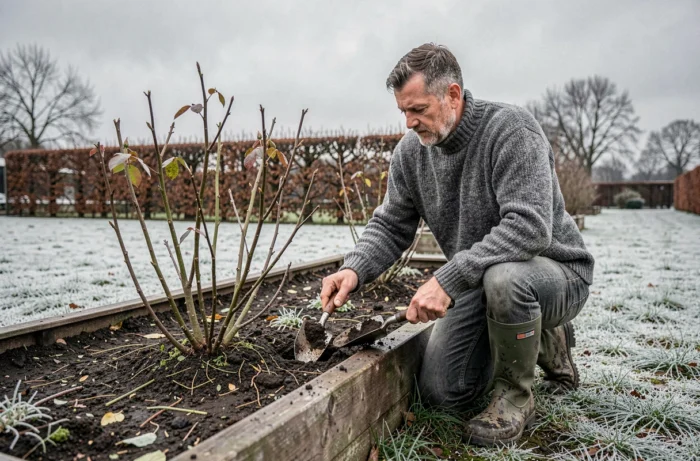
Organic nitrogen ceiling and regulatory constraints
Even in the garden, fertilization practices are framed by increasingly strict regulations. At the European level, several member states strictly apply the ceiling of 170 kg of organic nitrogen per hectare per year, accompanied by periods of spreading bans in autumn-winter to limit nitrate leaching.
These constraints, designed for agriculture, also influence the commercial formulations of garden fertilizers. Manufacturers reduce the nitrogen content of their autumn products and reformulate their mixes to comply with Regulation (EU) 2019/1009 on fertilizer safety. For gardeners, this means that commercially labeled “autumn-winter” fertilizers already contain an appropriate ratio, but their quality varies significantly between brands.
Check the labels on the packaging
We observe that many products display “autumn fertilizer” without specifying the exact NPK ratio. A reliable product always indicates the N-P-K contents as a percentage on the packaging. Ensure that the K value exceeds the N value by at least a factor of two for winter use.
Mulching and green manure: complements to the fertilizing mix
The fertilizer mix alone does not protect against the cold. Mulching acts as a thermal insulator for the soil and shallow roots. Shredded leaves, straw, or BRF (fragmented branch wood) are effective options.
Winter green manure, sown in autumn, provides living cover. Legumes (crimson clover, winter vetch, fava bean) fix atmospheric nitrogen in the soil through their root nodules. They enrich the soil without any external nitrogen input, which respects the constraints of winter leaching.
Combining a mix of legumes with organic mulch on bare plots in the vegetable garden creates a complementarity: the plant cover limits erosion, the mulch retains moisture, and the gradual decomposition of both nourishes the soil until spring.
The choice of winter fertilizer mix depends on the type of soil, the container (open ground or pot), and the cultivated plants. A dominant potassium ratio, a slow-release organic form, and prior flushing of the substrate in pots form the technical triptych to be respected. European regulations push in this direction, and gardening practices benefit from conforming to them.