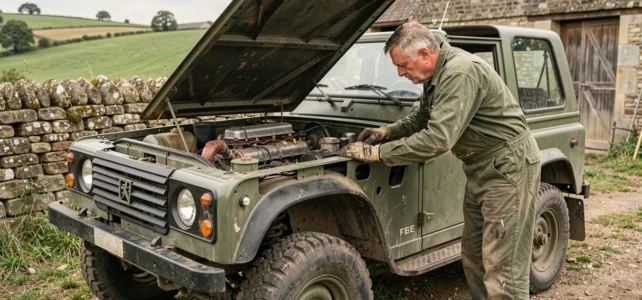
On the ground, a decommissioned Peugeot P4 presents a concrete problem from the first kilometers: the XD3 diesel engine lacks power under load, the steering is heavy without assistance, and rust has often attacked the wheel arches. Transforming this military vehicle for civilian use requires prioritizing the right projects, or else you risk spending a lot for a disappointing result.
We take stock of the modifications that truly change the behavior of a decommissioned P4, without losing sight of the administrative constraints that many owners discover too late.
Chassis and running gear of a decommissioned P4: the weak points to address first
Before touching the engine or aesthetics, we start from underneath. P4s released from the army have often been driven on tracks with little preventive maintenance of the chassis. The leaf spring bushings are generally worn out, and the original shock absorbers (if they are still installed) are no longer effective.
Replacing the shock absorbers with separate reservoir models like Bilstein or Rancho transforms the road behavior. You go from a vehicle that floats and bounces to something stable, even on asphalt. This is the modification with the best cost/result ratio on a P4.
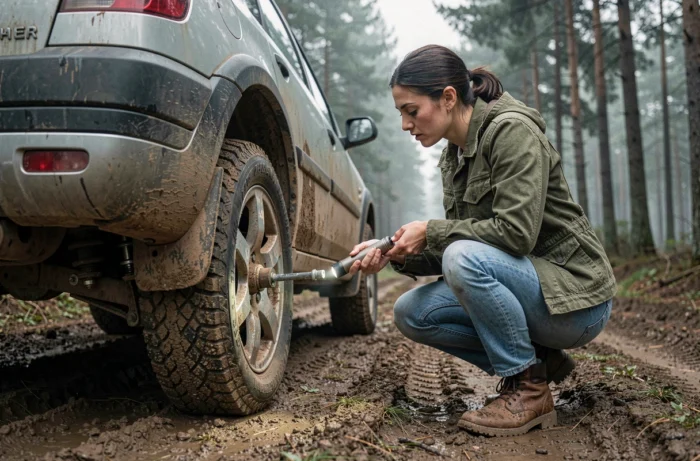
The steering knuckles and CV joints must be systematically inspected. On high-mileage P4s, play in the knuckles causes vague handling in corners and accelerated tire wear. The complete replacement of the pivot kits (bearings, seals, sleeves) is a project accessible in a home workshop, provided you have the right puller. You can find good tips for optimizing a Peugeot P4 that detail compatible references with the original Mercedes G running gear.
Engine swap on Peugeot P4: modern diesel or keep the XD3
The XD3 indirect injection engine is robust, but its power remains modest. When loaded uphill, you can feel it struggling, and overtaking on national roads requires anticipation. The question of engine replacement comes up in all discussions among P4 owners.
Keep and improve the XD3
If you want to stay close to the original (and maintain eligibility for the classic vehicle registration), you can intervene on the fuel system. Fine-tuning the Bosch injection pump, replacing the injectors, and installing an intercooler on turbo versions significantly improve engine response.
A well-sized turbo on an atmospheric XD3 radically changes the driving pleasure. Feedback on this point varies depending on the condition of the bottom end, but on a healthy block, the increase in low-end torque is notable.
Swap to a Mercedes engine or another diesel block
Some owners opt for a swap to a Mercedes OM602 or OM603, which fits into the engine compartment thanks to the technical kinship with the Mercedes G-Class. This choice offers more torque and better long-term reliability.
However, an engine swap forfeits the benefits of the classic vehicle registration. Since the clarification of the criteria, the vehicle must retain its original technical characteristics to benefit from the reduction on the regional tax and the spaced technical inspection. A P4 with an OM606 turbo block no longer falls into this category.
Classic vehicle registration and VASP homologation: the administrative trap of modified P4s
We mentioned it for the engine, but the issue goes further. Peugeot P4s are well over thirty years old and theoretically meet the conditions for classic vehicle registration: over thirty years, model no longer produced, original technical characteristics retained.
According to Le Journal de l’Automobile, the classic mention opens a 50% reduction on the regional tax and a technical inspection every five years. Any major modification (modified chassis, engine swap, extensive interior modification) can result in losing this status.
For those considering a transformation into a handcrafted camper or modified adventure vehicle, the situation becomes more complicated. As soon as there is a notable transformation, the administration may require an isolated reception (RTI) from DREAL to grant the VASP mention. Here are the points to check before starting a conversion:
- The type of vehicle on the current registration, which determines the homologation obligations in case of a change of use
- The compliance of the braking system after modification, as DREAL checks that the braking remains suitable for the new load weight
- The declaration to the insurer, who may refuse to cover a vehicle whose type or characteristics no longer match the registration
Corrosion protection and bodywork: restoring a military P4 to last
The military paint (generally in matte NATO green) adequately protects flat surfaces, but areas that retain water (rocker panels, inner fenders, floor under the seats) are often attacked. On a decommissioned P4, the first reflex is to turn the vehicle over on a lift and inspect every nook and cranny with a hammer.
Treating hollow sections with penetrating product is a priority before any painting. Painting over active rust only masks the problem for a few months. You strip, treat with rust converter, apply an epoxy primer, and then repaint.
For the color, there are two schools: those who keep the original military green (consistent with the classic spirit) and those who switch to a civilian color. The choice of color has no impact on homologation, but a P4 in NATO green with civilian plates attracts more attention during road checks.
Electricity and lighting: modernizing without starting from scratch
The electrical harness of a military P4 is minimalistic. No fog lights, no accessory socket, original lighting with classic low-efficiency bulbs. Driving at night with the original headlights can sometimes be a challenge.
Switching to LED bulbs on the front optics significantly improves visibility without altering the harness. For the rear lights, waterproof LED blocks from agricultural trailers fit easily and resist well to splashes.
- Add a battery cutoff switch accessible from the cabin, useful in case of a short circuit on an old harness
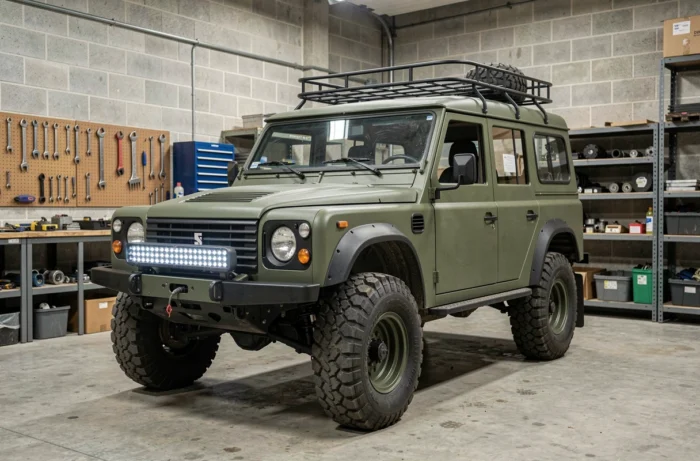
- Install a second independent electrical circuit for accessories (winch, roof LED bar, compressor), powered by an auxiliary battery
- Protect each branch with suitable fuses, as the original harness is not designed for additional loads
A well-restored P4 mechanically and protected against corrosion can serve for decades, whether for off-roading, forest outings, or rural utility use. The biggest risk remains embarking on costly modifications without having checked their compatibility with the vehicle’s administrative status.