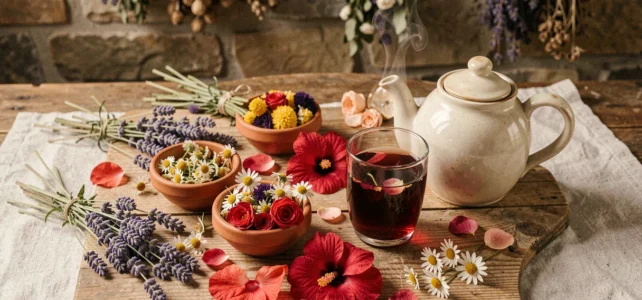
A cup of chamomile before sleeping, a few rose petals in simmering water on a Sunday morning: floral infusions are part of those simple gestures that seem obvious. The way each flower is treated, the chosen temperature, and the time of day radically change what ends up in the cup, both in taste and active compounds.
Petals, buds, or whole flowers: how the part used changes what’s in the cup
Have you ever noticed that an infusion of rose buds does not have the same fragrance as an infusion of detached petals? The reason is straightforward: aromatic compounds are not concentrated in the same place depending on the part of the flower.
Petals, thin and fragile, quickly release their volatile molecules. A few minutes are enough to obtain a fragrant but light herbal tea. Floral buds, denser, require a longer infusion time. They contain more tannins and pigments, resulting in a more colorful liquor and a more structured taste.
The whole flower (with its calyx) adds an extra dimension: vegetal notes, sometimes slightly bitter, that balance the sweetness of the petals. This is the case with whole infused Roman chamomile, whose small yellow heart concentrates the characteristic bitterness.
To explore this diversity, the flowers offered by Le Jardin de Gaïa allow for comparison of whole flowers, buds, and floral blends from organic farming.
Adapting the part of the flower to what you are looking for avoids disappointments. A herbal tea that is too bland often comes from petals alone infused too briefly. An overly astringent herbal tea indicates a bud or whole flower left too long in the water.
Temperature and infusion time: the trap of boiling water on flowers
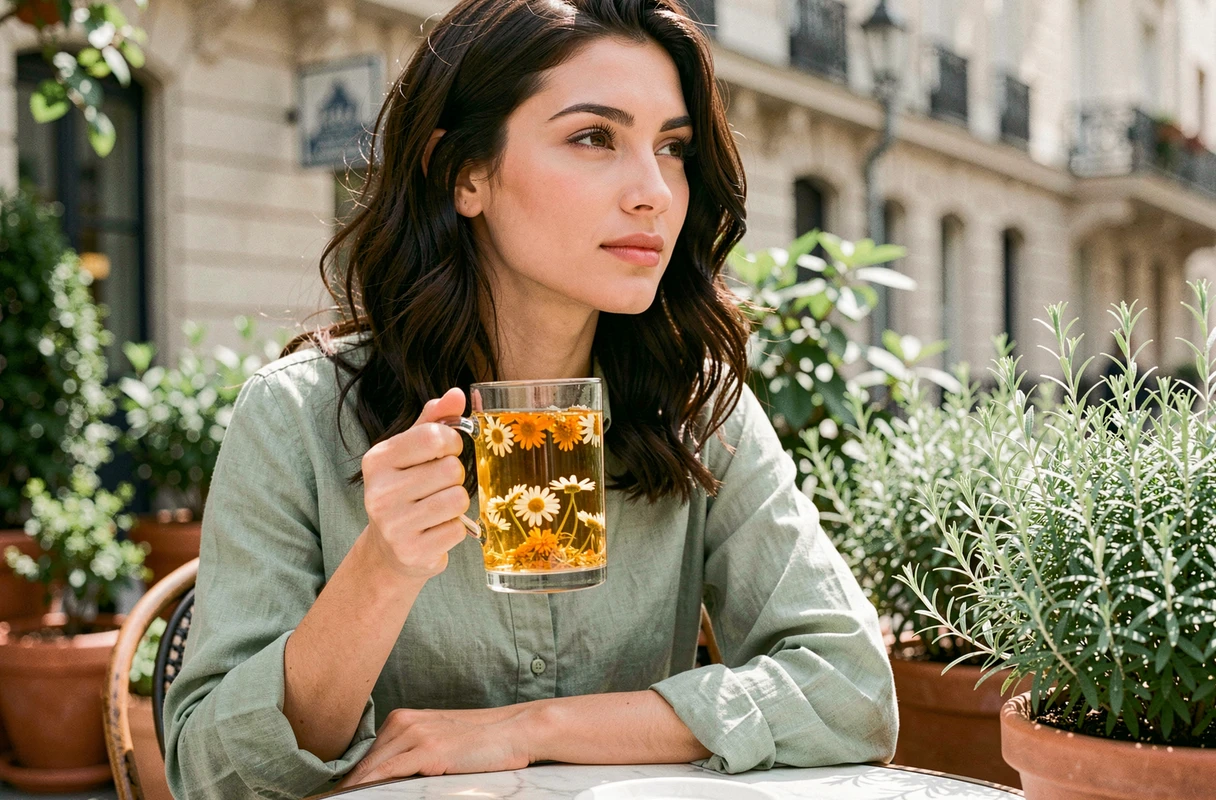
Infusion is the method best suited to the fragile parts of plants, especially flowers. Simmering water extracts volatile aromatic compounds without degrading them. In contrast, boiling water destroys the finest aromas and releases unnecessary bitterness.
What is the concrete difference between 85 °C and 100 °C? On a lavender flower, water that is too hot brings out camphor, a medicinal and pungent note that masks the floral roundness. On hibiscus, the difference is less pronounced because the flower is more resistant and its natural acidity withstands heat well.
Practical guidelines for common flowers
- Chamomile, linden, orange blossom: water between 80 °C and 90 °C, infusion for five to eight minutes. These delicate flowers lose their subtlety beyond that.
- Lavender and rose: water at a maximum of 85 °C, three to five minutes. Beyond that, lavender becomes camphoraceous and rose turns astringent.
- Hibiscus and mallow: water at 95 °C, five to ten minutes. Their thicker structure requires more heat to release pigments and flavors.
A simple guideline when you don’t have a thermometer: turn off the heat as soon as the first visible bubbles appear at the bottom of the pot. The water is then around 80-85 °C, which is suitable for most flowers.
Floral infusions according to the time of day: adapting the flower to the use
Each flower has an aromatic profile and properties that make it more relevant at certain times. The choice of flower makes practical sense when linked to the rhythm of the day.
In the morning: tonic and digestive flowers
Hibiscus, with its bold acidity and bright red color, works like a hot fruit juice. Its flavor recalls lemon and red fruits, making it an alternative to black tea for those looking to avoid caffeine. Mallow, milder, pairs well with breakfast as it is known for its soothing effect on digestion.
In the afternoon: aromatic flowers and gustatory pleasure
Rose and lavender find their place here. Their complex aromas are best enjoyed when the palate is not saturated by a recent meal. A rose-lemon blend, for example, offers a balance between floral sweetness and tangy freshness, ideal in the middle of the day.
In the evening: soothing flowers and non-stimulants
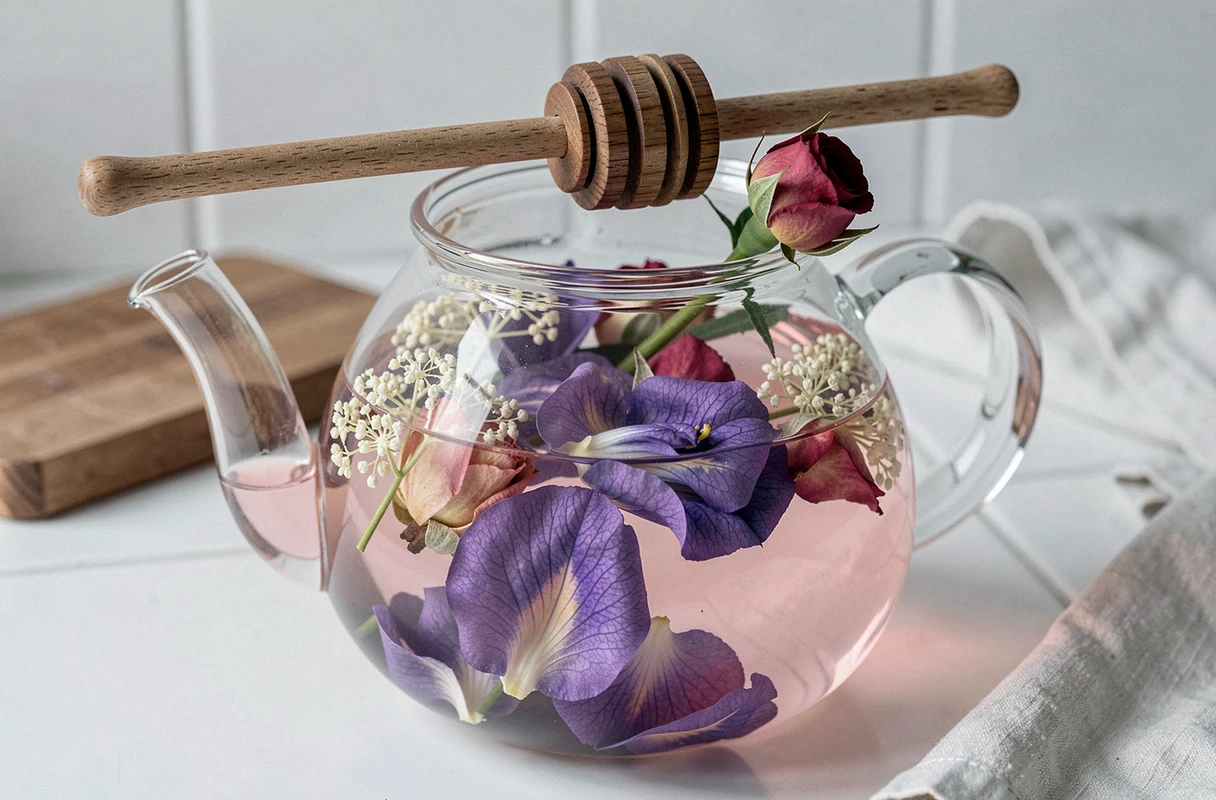
Chamomile and orange blossom logically dominate this time slot. Orange blossom is traditionally associated with relaxation, and its hydrosol is used well beyond the cup, in cosmetics and cooking. Linden, often overlooked in favor of chamomile, actually has a sweeter, slightly honeyed aromatic profile, which suits palates sensitive to bitterness.
Homemade blends and seasonal infusions: stepping away from standard bags
One of the interests of floral infusions lies in their ability to combine with each other and with other plants. Several specialized sources document a growing interest in seasonal blends and recipes using fresh herbs.
In summer, a hot hibiscus infusion cooled with lemon slices and a few fresh mint leaves makes a refreshing drink without added sugar. In winter, a blend of orange blossom, chamomile, and a zest of lemon warms without stimulating.
Some principles for composing your blends:
- Combine a dominant flower (the one that sets the aromatic tone) with one or two supporting plants (mint, verbena, thyme).
- Respect the same temperature requirements for mixed flowers to avoid a fragile flower being mishandled by the too-hot water needed for another.
- Taste the infusion after three minutes, then decide whether to extend. It’s better to have a light infusion that can be extended than a bitter herbal tea that is impossible to correct.
Gathering fresh flowers (garden lavender, linden collected in June) adds a seasonal dimension that standardized bags do not replicate. Air drying in the shade for a few days is enough to preserve the flowers for several months in an airtight jar.
Floral infusions are best approached as a culinary gesture rather than a simple health reflex. Choosing the right part of the flower, adjusting the temperature, and pairing flavors according to the season transforms a mundane habit into a true daily pleasure.