Transforming a house into a welcoming space relies on concrete choices, the impact of which varies greatly depending on the area concerned. Colors, storage, lighting, furniture: each lever produces a measurable effect on perceived comfort, but not all require the same investment or effort. Comparing these levers allows for prioritizing interventions that truly change the atmosphere of an interior.
Cost-effort ratio of interior transformation levers
Before repainting a wall or ordering a sofa, it is useful to consider the type of intervention, its relative cost, and its impact on the ambiance of a room. The table below summarizes the main areas of transformation for a living space.
| Lever | Relative Cost | Implementation Effort | Impact on Ambiance |
|---|---|---|---|
| Wall Colors | Low | Medium (surface preparation) | Very High |
| Lighting (multiplying sources) | Low to Medium | Low | High |
| Integrated Storage | Medium | Medium to High | High |
| Multifunctional Furniture | Medium to High | Low (purchase only) | Medium |
| Textiles (curtains, cushions, rugs) | Low | Low | Medium |
| Indoor Plants | Very Low | Low (regular maintenance) | Medium |
| Comprehensive Energy Renovation | High | Very High | Variable (thermal comfort) |
The conclusion is clear: color and light offer the best impact/investment ratio. Textiles come in just behind. In contrast, comprehensive energy renovation, while improving thermal comfort, represents a project of a completely different scale, especially since the regulatory changes of September 2026.
Ideas for layout and decoration for each room are also compiled on the website www c-fun fr, allowing for comparison of options without multiplying searches.
Colors and light: the two levers that truly transform a room
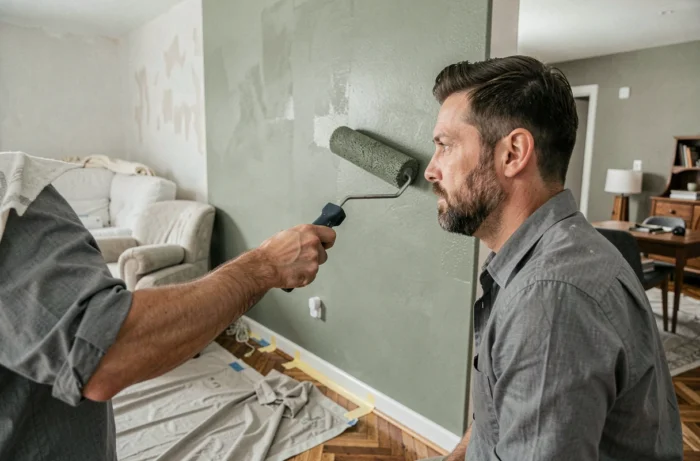
Repainting an accent wall in a living room or bedroom changes the perception of volume. A dark shade on one wall adds depth, while a light color on all walls visually enlarges the space. The choice is not limited to off-white or gray: earthy tones, muted greens, and faded blues are among the palettes that are reappearing in recent interior architecture projects.
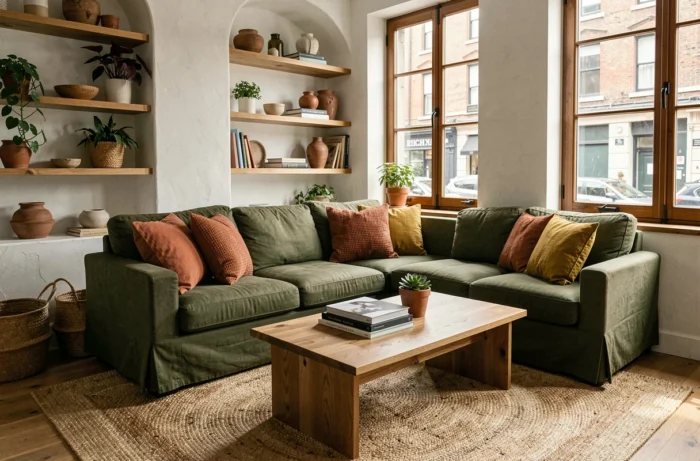
Conversely, a well-painted room that is poorly lit remains dull. Multiplying light sources changes the atmosphere more than a single central ceiling light. Three distinct sources (reading lamp, wall sconce, accent lighting on a piece of furniture) create ambiance zones that make a living room or dining room more welcoming in the evening.
The cumulative cost of a can of paint and two accent lamps is significantly lower than that of a new sofa, often resulting in a more visible outcome. This is the most striking gap in the table: furniture costs more but transforms the overall ambiance less.
Storage and furniture: where to place the cursor to gain space
Integrated storage has an immediate effect on the feeling of space. A wall of cabinets in an entryway or hallway eliminates visual clutter and frees up floor space. The principle is simple: every visible object that does not have a decorative function weighs down the room.
Multifunctional furniture (bed with drawers, extendable table, storage bench) meets a real need in compact living spaces. Their effectiveness depends on the targeted room:
- In a bedroom, a storage bed replaces a dresser and clears an entire wall for another function (desk, bookshelf).
- In a living room, a coffee table with integrated storage absorbs remote controls, magazines, and cables without adding an extra piece of furniture.
- In a dining room, an extendable table allows for a transition from everyday use for four to a meal for eight, without additional furniture.
A common trap is accumulating clever furniture without first decluttering. Clearing out before furnishing remains the first step to successful layout.
Textiles and plants: the complement, not the starting point
Changing curtains, adding a rug, or placing cushions on a sofa adds a layer of tactile and visual comfort. These elements act as finishing touches: they amplify the effect of a room that is already well arranged, but do not compensate for poor lighting or excessive clutter.
Indoor plants play a similar role. They introduce texture and vibrant color at a very low cost. Their limit is maintenance: a wilting plant produces the opposite effect of what is desired. It is better to have three resilient plants well placed than a dozen fragile varieties scattered throughout the house.
Energy renovation and home transformation: the framework changed in September 2026
A more ambitious transformation project may include insulation or heating work. Since September 1, 2026, the MaPrimeRénov’ scheme has been refocused on large-scale renovations and decarbonized heating equipment. Work carried out in isolation (insulation only, window replacement, ventilation, thermodynamic water heaters, wood/biomass and solar thermal equipment) is no longer eligible for the “by gesture” pathway.
In practical terms, a household that was considering changing its windows to improve the comfort of a room without touching the rest of the building can no longer count on this aid. Only comprehensive renovations combining multiple areas remain funded. For assisted large-scale renovations, retaining gas heating is also prohibited.
This regulatory constraint changes the hierarchy of priorities. If the budget is limited, decorative levers (color, light, textiles, storage) become even more relevant: they improve perceived comfort without triggering a comprehensive project subject to new eligibility conditions.
The best starting point for making a house more welcoming remains the most accessible: a repainted wall, two added light sources, a bulky piece of furniture removed. These simple gestures produce a visible change in just a few hours, without relying on any aid scheme or craftsman.