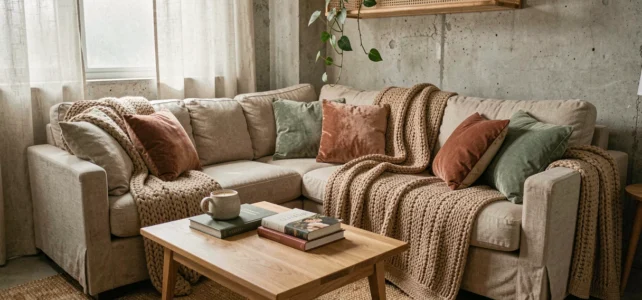
Transforming a house into a dream cocoon is not just about piling blankets on a sofa. The comfort felt in an interior depends on a set of parameters that go beyond visible decoration: the quality of the air breathed, the temperature of the light, the choice of materials in contact with the skin. The 2026 decoration trends confirm this shift towards a global sensory comfort, where each room is designed for physical as well as visual well-being.
Indoor air quality: the invisible parameter of a cocoon home
Decor articles often talk about soothing colors and fluffy cushions. They rarely address a factor that conditions the feeling of refuge: the air you breathe at home. A recent scientific review links exposure to indoor air pollutants (VOCs, formaldehyde, fine particles) to respiratory and cardiovascular disorders and allergic reactions.
A cocooning interior that emits volatile compounds from low-quality scented candles, uncertified paints, or new particle board furniture produces the opposite of the desired effect. Olfactory comfort first requires effective ventilation and low-emission materials.
Several concrete actions can be taken on this point without a huge budget:
- Ventilate each room at least twice a day, even in winter, for about ten minutes to renew the air without cooling the walls
- Prefer paints and varnishes with a low VOC emission label during any wall refresh
- Replace synthetic scented candles with vegetable wax candles without synthetic fragrance, or with beeswax
- Check the maintenance of the ventilation system outlets and never obstruct them, even for aesthetic reasons
Specialized resources in interior design compile inspirations that take these issues into account, such as https://homedream.fr/, which offers well-being-oriented decor ideas for everyday life.
Filtered light and amber glass: creating a cocooning atmosphere through visual warmth
Artificial light is the most underestimated lever in transforming an interior. A cold white LED ceiling light is enough to ruin the atmosphere of a well-furnished living room. The 2026 decor guides identify amber glass as a key material for diffusing warm and soft light, particularly suitable for cocooning evenings.
The principle is simple: tinted glass filters the most aggressive wavelengths and produces an orange halo reminiscent of candlelight. When combined with accent lamps placed at seating height (table lamp, low floor lamp), it advantageously replaces a single central light source.
Multiplying sources rather than watts
Three low-intensity lamps spread throughout a living room create an enveloping atmosphere that a single powerful fixture will never replicate. This principle applies to the bedroom as well as the office space: the layering of low light sources radically transforms the perception of a space.
Chrome, another material identified in the 2026 trends, adds reflections that energize ambient light without intensifying it. A chrome lamp base, a metal-framed mirror, or a candlestick are enough to introduce this material in touches.
Natural materials and enveloping palette: sensory comfort beyond the visual
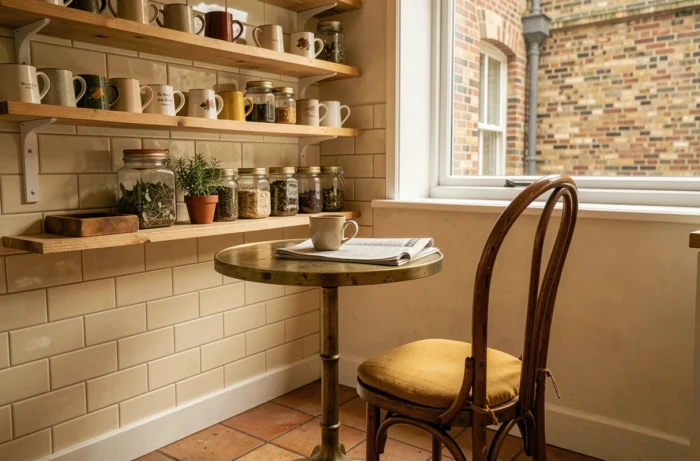
Wood, linen, boucle wool: these materials appear in all cocooning interiors for a reason that goes beyond aesthetics. They naturally regulate humidity, remain pleasant to the touch regardless of ambient temperature, and age without losing their character.
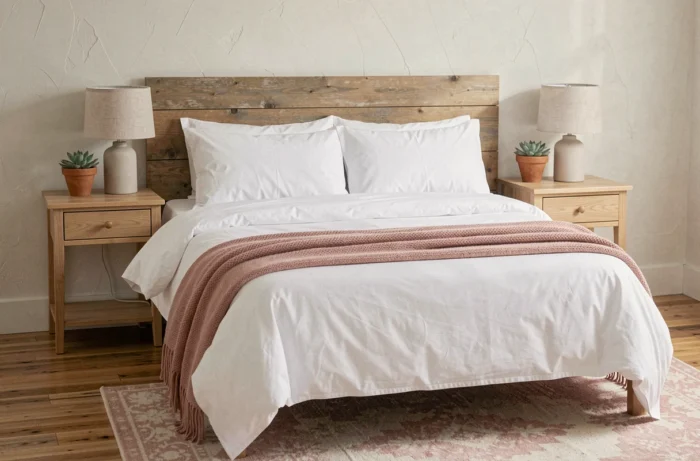
The 2026 bedroom inspirations emphasize a global sensory comfort designed for sleep quality. The palette is organized around terracotta, sage green, and midnight blue shades, warm or deep colors that promote visual soothing.
Textiles: the layer that changes everything in a living room or bedroom
A boucle fabric sofa, a thick wool blanket draped over the armrest, crumpled linen cushions: the layering of textiles with varied textures creates immediate tactile richness. The rug remains a determining element, provided that a sufficiently dense weight is chosen to cushion footsteps and insulate from the floor.
Organic shapes (rounded corners, curved seating, irregular mirrors) complement this approach by eliminating hard angles that stiffen a space. A cocooning interior is built as much by shapes and textures as by colors.
Remote work and time spent at home: rethinking the cocoon as a functional space
The increase in time spent at home since the rise of remote work has changed expectations for living spaces. A dream cocoon in 2026 can no longer be limited to a photogenic living room. It must also accommodate hours of focused work, video conferences, and moments of relaxation within the same perimeter.
This constraint pushes us to rethink the zoning of rooms. An integrated office nook in the living room, separated by an open wooden shelf, allows for maintaining a warm atmosphere while visually delineating the professional space. The functional cocoon integrates work without sacrificing rest.
Field feedback varies on the best way to acoustically isolate a desk corner in an open space. A thick velvet or lined linen curtain offers a flexible, easily movable solution that contributes to the cocooning decor while dampening sounds.
The challenge is no longer just to decorate your home, but to configure it so that it meets overlapping uses. Every square meter must be able to switch between relaxation and productivity without visual friction. Natural materials, crafted light, and healthy indoor air form the foundation upon which everything else rests.