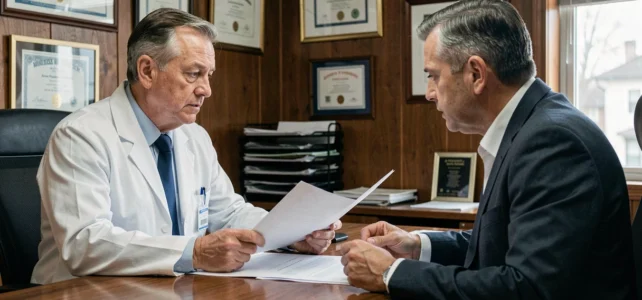
In France, several institutions share the oversight of medical activity. The Order of Physicians, Health Insurance, Regional Health Agencies, and the High Authority of Health: the control of physicians relies on a network of actors with distinct, sometimes redundant, and sometimes lacking prerogatives. This system, designed in successive layers, raises a direct question: are these controls sufficient to guarantee the quality of care and the protection of patients?
Control Medicine and Teleconsultation: A Regulatory Blind Spot
The development of telemedicine has created a gap between practices and oversight tools. The National Council of the Order of Physicians has published specific recommendations on remote control medicine, acknowledging that evaluating a patient via a screen does not engage the same clinical benchmarks as a physical examination.
The CNIL reminds us that telemedicine raises particular issues regarding the processing of health data, even if these processes do not, in principle, require specific formalities beyond the GDPR. The question at hand is less about the legality of the act than about the actual ability of a controlling physician to verify, via a screen, the consistency of a sick leave or the relevance of a prescription.
Rules are also evolving for sick leaves prescribed via telemedicine. This tightening reflects an awareness: an article detailing medical control on Néo Santé clearly shows that the practitioner’s responsibility remains engaged, whether the consultation is physical or dematerialized.

Ordinal Control of Physicians: Disciplinary Sanctions and New Protection Missions
The Order of Physicians remains the primary disciplinary control body. It ensures compliance with the medical code of ethics and can impose sanctions ranging from warnings to expulsion. The procedure goes through disciplinary chambers, first regional, then national on appeal, with the possibility of recourse to the Council of State.
This disciplinary framework is undergoing notable evolution. A decree from July 2026 modified the medical code of ethics, indicating that the normative reference is not fixed. Ethical obligations adapt to changes in practice, including on topics such as the physician’s loyalty to the patient or transparency in the event of a medical error.
An Expanded Role for Practitioner Safety
Physician control is no longer limited to sanctioning their shortcomings. Since 2026, the Order of Physicians or the Regional Unions of Health Professionals (URPS) can file a complaint on behalf of a practitioner who is a victim of aggression, under written mandate. This institutional evolution recognizes that monitoring medical activity also involves protecting those who practice it.
This dual function (sanction and protection) alters the relationship between physicians and their ordinal body. The Order is no longer seen solely as a police force but also as a recourse against the increasing violence in practices and hospital services.
Health Insurance and Prescription Control: The Economic Logic
Health Insurance has its own advisory physicians responsible for verifying the relevance of sick leaves and prescriptions. This control is based primarily on a financial logic: detecting abuses, reducing unjustified expenses, and regulating prescribing practices.
The tools for this control have been refined:
- Statistical analysis of atypical prescribing profiles, meaning physicians whose volumes of sick leaves or prescriptions deviate significantly from the average of their specialty and geographic area
- Home medical visits for employees on sick leave, triggered by the employer or the primary health insurance fund
- Enhanced honorability checks for health professionals working with vulnerable populations, particularly in child protection
The Court of Auditors has pointed out the limitations of this system. Field feedback varies on the actual effectiveness of the controls: the volume of controlled prescriptions remains low compared to the total number of acts. The gap between the human resources of the funds and the number of practicing physicians constitutes a structural bottleneck.

Epidemiological Surveillance and Sentinel Networks: Collective Control of Practices
A part of medical control escapes the usual radars of public debate. Health surveillance partly relies on the voluntary participation of general practitioners and pediatricians in sentinel networks. These practitioners report epidemiological data on several indicators (flu syndromes, gastroenteritis, suicide attempts, etc.).
Public Health France has strengthened a common surveillance logic after the Covid-19 crisis, bringing together different data sources to cross signals. This system does not aim to individually control physicians but to collectively assess the healthcare system’s response to health threats.
A Control Without Sanction, But Structuring
Sentinel networks operate on a voluntary basis. No sanctions apply in case of non-participation. Their effectiveness thus depends on the number of engaged physicians and the quality of the transmitted data.
This model illustrates a recurring tension in medical control in France: surveillance often relies on the voluntary adherence of practitioners rather than on coercive mechanisms. The freedom of practice, a founding principle of the French healthcare system, structurally limits the scope of control mechanisms.
- Disciplinary control sanctions ethical breaches, but the chambers are congested and delays are long
- The economic control of Health Insurance targets prescription abuses without assessing the clinical quality of care
- Epidemiological surveillance produces collective data useful for public health, without individual feedback to the practitioner
These three logics coexist without true coordination. No body has a comprehensive view of a physician’s practice, combining quality of care, ethical compliance, and economic relevance. Medical control in France operates in silos, each keeping its share without access to the complete picture.