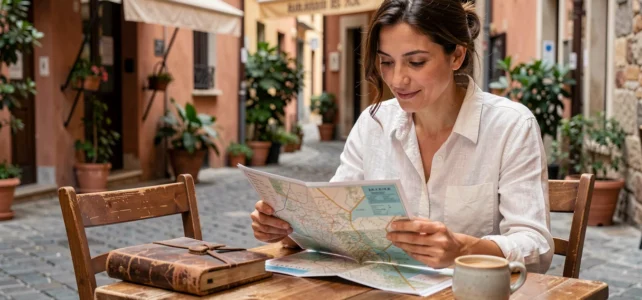
Traveling differently means rethinking every step of the journey to create a richer, slower, and sometimes simpler experience. Slowing down the pace, choosing a different mode of transport, or prioritizing proximity profoundly changes the way a place is discovered.
Sustainable mobility in Europe: how new air transport regulations are changing things
Have you ever noticed that the price of an intra-European flight ticket almost never reflects its real cost to the environment? The ReFuelEU Aviation regulation (Regulation (EU) 2023/2405), applicable since January 1, 2025, begins to correct this anomaly. It requires fuel suppliers at airports in the European Union to incorporate a minimum of 2% sustainable aviation fuel into their blends, with a progressive trajectory rising to 70% by 2050.
In practical terms, this obligation gradually increases the cost of short-haul flights. Travelers who are torn between a flight from Paris to Barcelona and an overnight train journey now have an economic argument in addition to the ecological one. Ultimately, a standardized display of emissions for each flight will be integrated into booking tools, allowing for climate impact comparisons even before clicking “book.”
This dynamic is reflected in the behaviors of European travelers. Human-powered or electric mobility (biking, walking, electric transport) is gaining ground, while dependence on predominantly fossil fuel transport is declining. The movement is underway, and it is already changing the way routes are conceived.
For those who wish to organize a journey considering these developments, specialized platforms centralize accommodations, destination ideas, and practical advice tailored to each travel style: https://www.lamaisonduvoyageur.com/ is a good example.
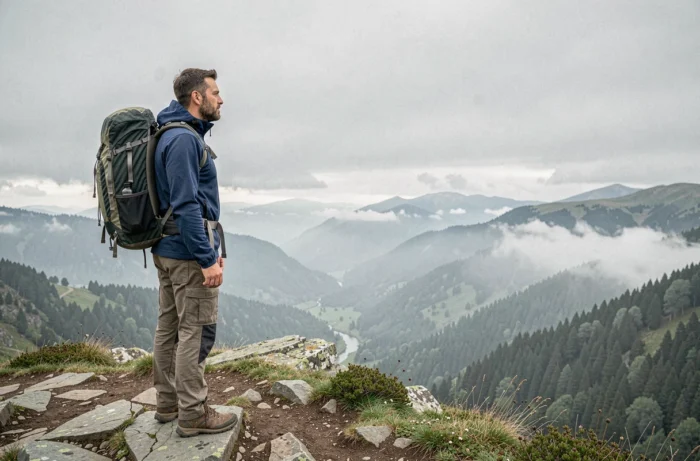
Slow tourism by train or bike: building an itinerary differently
Slow tourism is based on a simple idea: slow down to see better. Replacing a flight with a train journey between two European cities does not necessarily extend the trip by several days, but transforms the journey itself into an experience.
Why this choice? Because a train journey between Lyon and Milan passes through alpine landscapes that no window seat can show. Because a bike leg between two villages in southern France forces you to stop, eat local, and sleep in accommodations that mass tourism ignores.
Three formats of slow tourism that work
- The train road trip: connecting several European cities with a rail pass, planning two to three nights per stop instead of just one. The pace allows time to go beyond tourist neighborhoods.
- The bike trip on greenways: France has a dense network of marked bike routes. A week on the Loire à Vélo or the Canal du Midi offers a difficult-to-match effort/discovery ratio compared to a car.
- The camper van as a mobile base camp: less fast than a classic road trip, the van requires choosing your stops. Natural areas and farms that welcome van travelers create encounters impossible in a standardized hotel.
In each of these formats, the journey is part of the trip instead of being just a prerequisite. It’s a shift in perspective that often costs no more, and sometimes even less.
Nearby destinations in France: experiences that are often underestimated
Traveling differently does not always mean going far. France offers a diversity of landscapes and regional cultures that many travelers know little about. A stay in the Causses du Quercy, a hike on the GR20 in Corsica, or a week kayaking on the Dordogne provides a change of scenery comparable to a trip abroad.
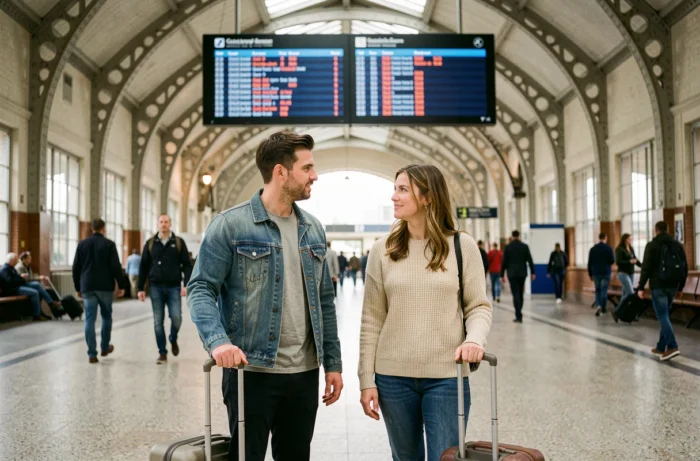
The classic trap of nearby travel is planning it like a distant journey: tight schedule, list of activities, races against the clock. Planning fewer stops allows for better enjoyment of each place. Two or three destinations in ten days are better than seven.
Local accommodations and cultural immersion
The choice of accommodation determines the quality of the experience. A guest room run by local villagers provides access to advice, addresses, and stories that tourist guides do not mention.
Practices in certain regions deserve a stop: participatory grape harvesting in autumn, lavender picking in Provence, educational farm stays for families. These experiences rooted in local culture are not found in a catalog, but they often constitute the best memories of the journey.
Preparing for a responsible trip: concrete reflexes to adopt before leaving
A “different” trip is prepared in advance, not just on-site. A few reflexes are enough to reduce the footprint of a journey without diminishing the pleasure.
- Systematically compare train and plane for journeys under six hours. The real time savings of flying, once airport time is accounted for, is often marginal.
- Prefer independent accommodations or recognized environmental labels over large standardized chains.
- Bring a reusable water bottle, a reusable bag, and travel cutlery. These details may seem trivial, but they eliminate a significant amount of waste on a ten-day trip.
- Choose one or two destinations instead of multiplying internal flights. Fewer trips, more time at each location.
Traveling differently is not a moral constraint or a renunciation of pleasure. It’s a trade-off: exchanging speed for intensity, the quantity of destinations for the depth of each encounter. European regulations are pushing in this direction, as are traveler behaviors.