Simple hybrids now account for more than a third of new registrations in the European Union. This shift redistributes the cards well beyond just the choice of engine: it alters mechanical architectures, maintenance strategies, and purchasing criteria in the used car market.
48 V hybrid architectures and mild hybrid engines: what’s changing under the hood
The widespread adoption of 48-volt mild hybrid systems in segments B and C is transforming the mechanical design of powertrains. The 48 V network is no longer limited to a reinforced starter-generator: it now powers electric compressors, decoupled water pumps, and energy recovery systems during braking that can relieve the transmission during acceleration phases.
This architecture requires a dual electrical circuit (12 V + 48 V), complicating diagnostics in workshops. Technicians must master high-voltage lockout protocols, even on vehicles that are not perceived as “electric” by their owners.
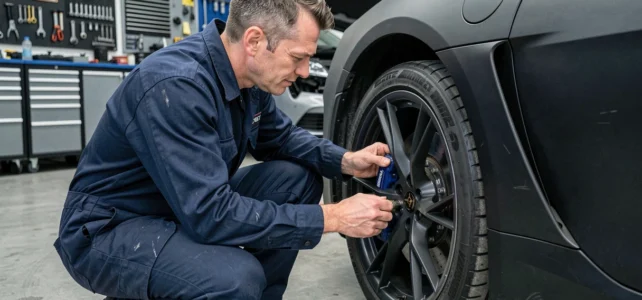
We observe that the intervals for replacing brake pads are significantly lengthening on these engines, thanks to regenerative braking. Conversely, the discs suffer more from superficial corrosion due to lack of use, a phenomenon that generates vibrations during braking if the vehicle is driven infrequently. For those who wish to discover news on Passion Auto Méca, these preventive maintenance topics are part of the technical angles regularly addressed.

ZFE restrictions and Crit’Air sticker: concrete impact on the used car market
The expansion of low emission zones in France is pushing Crit’Air 3, 4, and 5 vehicles out of urban centers. Gasoline engines from before 2006 and diesels from before 2011 are gradually losing their right to circulate in the affected areas.
The depreciation of Crit’Air 3 vehicles has accelerated significantly since the beginning of the year. In the used car market, this regulatory pressure creates two opposing dynamics:
- Crit’Air 1 and 2 models in good condition maintain a high residual value, particularly recent simple hybrids and Euro 6d-Temp gasoline vehicles.
- Older diesels see their prices drop in suburban areas but remain sought after in rural areas where restrictions do not apply.
- Used electric vehicles (Crit’Air 0) are gaining attractiveness, provided that the battery’s condition is documented by a residual capacity certificate.
We recommend systematically checking the Crit’Air compatibility of a used vehicle with the ZFE of its main place of use before any transaction. An attractive model on paper can become unusable in daily life.
Embedded technologies and assisted driving: beyond marketing
ADAS (Advanced Driver Assistance Systems) have reached a level of maturity that makes them structural in the choice of a new vehicle. Autonomous emergency braking with pedestrian and cyclist detection is mandatory on all models approved under the GSR2 regulation in Europe.
The adaptive cruise control coupled with active lane keeping is becoming almost standard equipment in segments C and D. The difference between manufacturers now lies in the smoothness of intervention and the management of critical situations (highway exits, roundabouts, construction).
One technical point deserves attention: the calibration of front cameras after windshield replacement. This operation, billed at several hundred euros at dealerships, is often overlooked during a glass breakage incident. A poorly calibrated ADAS can brake unexpectedly or fail to detect an obstacle.
OTA connectivity and remote updates
Over-the-air (OTA) updates allow manufacturers to fix software bugs, improve engine mappings, and deploy new functions without a workshop visit. This practice changes the very notion of a vehicle’s version: two identical units coming off the same assembly line can offer different performances depending on the updates applied.
For the used car buyer, this means checking the embedded software version and ensuring that the vehicle is eligible for future updates. Some manufacturers condition access to software upgrades on a paid subscription, adding a recurring cost item.
Multi-technology landscape in Europe: what market shares say
Classic gasoline and diesel engines are showing a double-digit decline in the first half, and their combined share has fallen below 30% in several European countries. The emerging landscape is not one of 100% electric dominance, but of sustainable coexistence between simple hybrids, plug-in hybrids, and battery vehicles.
Plug-in hybrids (PHEVs) maintain a niche due to tax advantages in several markets, but their relevance heavily depends on usage profile. A PHEV primarily used on the highway without regular charging consumes as much, if not more, than a lighter simple hybrid.
The choice of engine in 2026 will depend on daily travel, not on trendy technology. An urban driver covering less than 40 km per day benefits significantly from 100% electric. A mixed profile with regular long trips is better served by a simple hybrid or a disciplined plug-in hybrid regarding charging.
The Paris Motor Show scheduled for October will concentrate a large part of the manufacturers’ announcements for the end of the year. The expected models confirm this diversification: compact electric SUVs from several brands, as well as the renewal of hybrid ranges and the emergence of new players, notably Chinese, in the accessible vehicle segment.