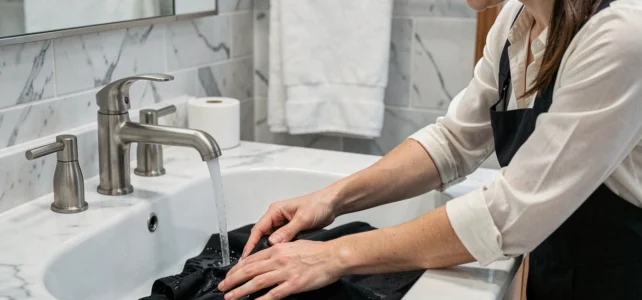
The Kooples dresses often combine several fibers in the same model: viscose, polyester, silk, sometimes lyocell or elastane in small proportions. This complexity of composition radically changes the way the fabric reacts to water, heat, and spinning. Properly washing a The Kooples dress first means understanding what the material can tolerate, then adapting each step of the washing process to these constraints.
Textile composition of The Kooples dresses: what viscose and silk impose on washing
Viscose, omnipresent in The Kooples collections, is a regenerated cellulosic fiber. In its dry state, it retains a beautiful shape. When wet, viscose loses up to half of its mechanical strength. A spin that is too vigorous or strong rubbing during washing is enough to irreversibly deform the fabric.
Viscose-polyester blends are more tolerant, as polyester stabilizes the structure. However, dresses with a portion of silk or lyocell require extra attention: these fibers mark with hot iron and dislike chlorine.
We recommend checking the exact composition on the inner label before choosing a program. A dress labeled “100% viscose” does not wash like a model “65% polyester, 35% viscose.” The proportion of fragile fibers dictates the severity of the protocol. To delve deeper into this point, Paris Blogged’s tips detail the precautions material by material.
Another often overlooked detail: European regulation no. 1007/2011 requires the mention of fiber composition on the label, but there is no legal obligation for detailed care instructions. The pictograms you find on a The Kooples dress are part of a voluntary approach by the brand. When the symbols are minimalistic, it’s up to you to interpret based on the declared material.
Temperature and machine program: the setting that preserves the dress
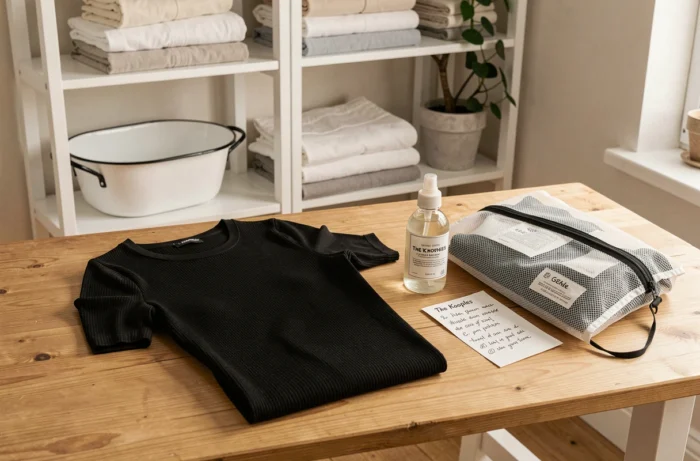
Thirty degrees maximum, delicate cycle, reduced spin: this is the basic triptych for any The Kooples dress going in the machine. The brand’s recent product sheets confirm this orientation, including for everyday pieces like t-shirts, where tumble drying is explicitly prohibited.
The “delicate” or “silk” program on your machine limits drum rotation and shortens spin phases. We observe that much damage occurs not during the wash itself, but during the final spin. Setting the spin speed below 600 revolutions per minute significantly reduces the risk of permanent wrinkling and seam deformation.
Hand washing: when the machine is not an option
For pure silk or very fine viscose dresses, hand washing remains the safest method. Fill a basin with cold or lukewarm water, add a minimal dose of liquid detergent without enzymes, and let the dress soak for a few minutes.
- Never twist the fabric to wring it out: gently press it between your hands, then roll the dress in a clean towel to absorb excess water.
- Avoid any soap containing bleaching agents, even “gentle”: sodium percarbonate attacks silk and alters the dark dyes typical of The Kooples.
- Rinse with clear water, at the same temperature as the washing bath, to avoid thermal shock that would cause localized shrinkage on the viscose.
Drying and ironing a The Kooples dress: costly mistakes
The tumble dryer is the main enemy. The brand now prohibits tumble drying on the majority of its pieces, including those made from blended cotton. Rotating heat causes shrinkage of cellulosic fibers and can warp decorative seams or lace inserts.
Flat drying on a towel remains the most reliable method to maintain the original shape. If you use a hanger, choose a wide, padded model to avoid marking the shoulders. Thin metal hangers leave angular creases that are difficult to correct later.

Ironing: temperature and technique
The Kooples labels generally allow for ironing at a maximum of 110 °C, which corresponds to the “synthetic” or “silk” setting on most irons. On a viscose dress, always iron on the reverse side of the fabric, with a damp intermediate cloth if necessary.
Direct steam should be avoided on silk: it causes visible rings, especially on dark colors. A vertical steamer, held at a safe distance from the fabric, is a safer alternative for finishing.
Storage and washing frequency: extending the garment’s lifespan
Washing a dress after each wear is not always necessary, especially for models worn for a short time. Air out the dress after each use reduces the need for frequent washes and limits mechanical wear on the fibers.
Store viscose and silk dresses on wide hangers, in a dry place and away from direct light. Breathable fabric covers protect dark pieces from UV-related fading, a common issue with the black dyes characteristic of the brand.
- Never store a The Kooples dress folded in a drawer: viscose permanently marks creases, and aggressive ironing to correct them risks shining the fabric.
- Keep silk pieces away from heat sources (radiators, south-facing windows) that dry out the fiber and make it brittle.
- For localized stains, targeted cleaning with diluted Marseille soap, applied with fingertips without rubbing, avoids a complete machine wash.
The care taken at each step (composition checked, temperature respected, appropriate drying) directly determines the longevity of a The Kooples dress. The materials used by the brand are selected for their drape and visual effect, not for their robustness in intensive washing. Adapting your habits to this textile reality is what makes the difference between a dress that lasts several seasons and a piece that is deformed after three machine washes.