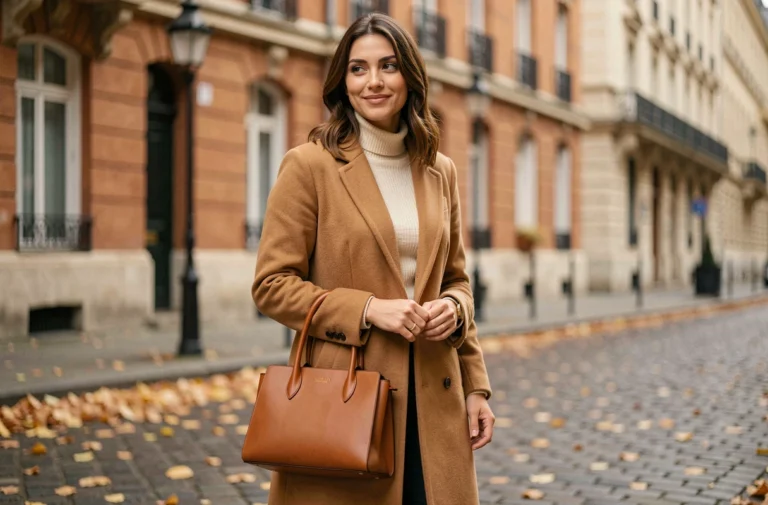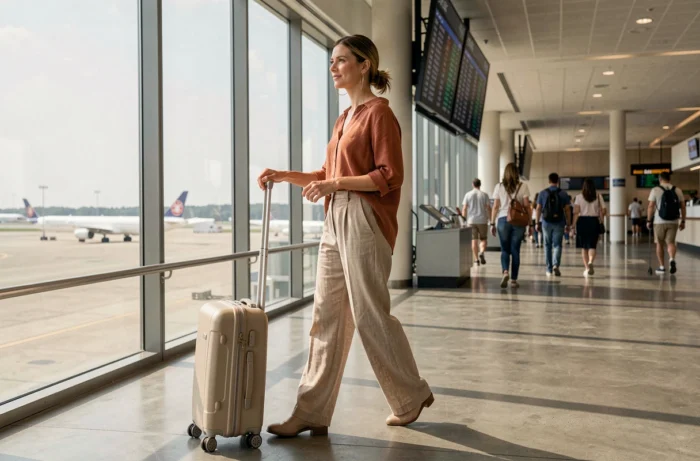
The journey for women is no longer an editorial niche. This segment now impacts the product strategies of tour operators, the design of accommodations, and the pricing policies of airlines. We are witnessing an acceleration in the launch of tours and services dedicated to female travelers, driven by a structural demand that goes beyond a mere trend.
Security surcharge: the invisible cost of female travel
Mainstream articles celebrate the rise of solo female travel without addressing an angle that Géo recently documented: traveling alone as a woman has an invisible cost, that of security. Better-located hotels to avoid certain neighborhoods at night, private taxis instead of late public transport, accommodations with 24/7 reception – these choices inflate the budget without appearing in standard price comparisons.
This surcharge is neither anecdotal nor trivial. It shapes purchasing decisions and partly explains why specialized “solo travel” agencies are so successful in France. According to an analysis by RMC published in 2026, their clients are mostly women looking to combine independence with a sense of security by traveling with a guided group rather than completely alone.
To follow Mamzelle Voyage’s news, which regularly addresses these pricing and logistical issues, is a useful reflex before finalizing an itinerary.
Perceived security and real security: what recent surveys say
Security remains the primary barrier reported by women, far ahead of cost or language. Studies published in 2025-2026 confirm that more than half of the women surveyed cite security as the main obstacle to solo travel. The discourse of French-speaking blogs, often very optimistic, clashes with a more nuanced reality.
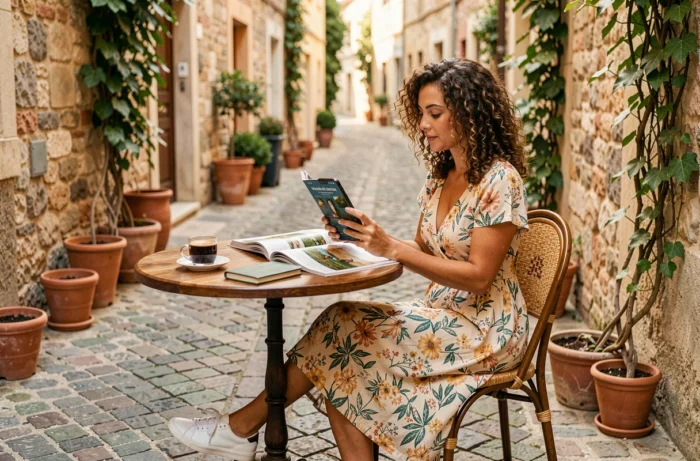
A European study reported by Gourmet Report in 2026 shows that about half of French women feel relatively safe when traveling solo. A notable proportion state they do not feel safe at all, and a significant share claims they would “definitely not” travel alone.
We recommend reading this data as a signal for the industry, not as a deterrent. Destinations that invest in the safety of female travelers attract a loyal and high-spending clientele. Iceland, Portugal, and Finland are among the most frequently mentioned European destinations in the 2026 safety rankings for solo female travel.
Concrete criteria that underpin these rankings
- Quality of street lighting and accessibility of night transport in major cities
- Reported crime rates specifically against foreign tourists, not the general population
- Presence of dedicated infrastructures: hotels with floors reserved for women, verified local transport apps
- Protective legal framework and responsiveness of local authorities in case of an incident
Women-only tours: an evolving business model
“Women only” offers are no longer limited to a few yoga retreats in Bali. Tour operators like Climats du Monde now offer complete tours reserved for female travelers, with sophisticated itineraries in Thailand, combining cultural visits and beach time, for durations of ten nights or more.
The model is based on a slightly higher price than the equivalent mixed tour, justified by tailored services: female guides, accommodations selected based on enhanced security criteria, group activities tailored for solo female travelers.
The BBC documented in 2026 what it calls “the controversial economics of women-only travel.” The debate centers on the legitimacy of charging more for a service that compensates for a structural inequality. Operators see it as a premium positioning. Female travelers, on the other hand, weigh the extra cost against logistical peace of mind.
Typical customer profile
Agencies surveyed by RMC describe a clientele that does not fit the stereotype of the young backpacker. The typical solo female traveler is often between 35 and 55 years old, has a comfortable budget, and seeks an immersive experience without the mental burden of organizing everything alone in an unfamiliar country.
This profile explains the premium orientation of the offers and the upgrading of the accommodations provided. Female travel is professionalizing, with service standards approaching bespoke levels.
Editorial trends and female travel content in 2026
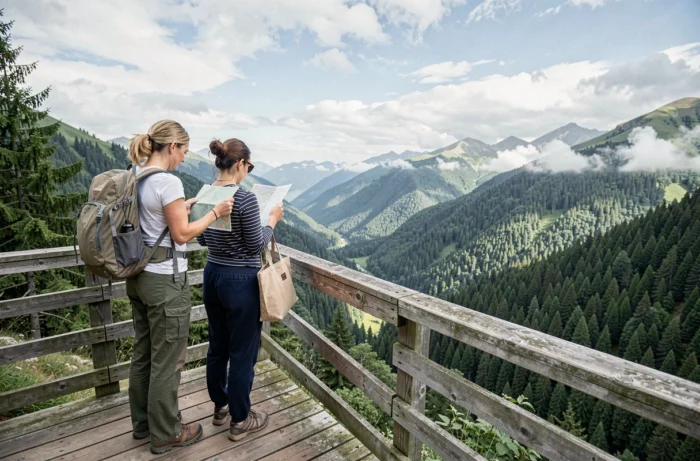
The media treatment of female travel has changed its tone. Pioneering blogs, often run by individual travelers sharing their travel diaries, are giving way to structured media that produce analyses, price comparisons, and field surveys.
We observe three dominant editorial axes:
- Destination guides filtered by female safety criteria, with updated data rather than mere personal impressions
- Surveys on the real cost of solo female travel, incorporating the security surcharge documented by Géo and the BBC
- Feedback on women-only tours, with a critical analysis of the services relative to the price
Brazil illustrates this trend: a Brazilian survey from 2026 indicates that a significant portion of Brazilian women have traveled alone, which fuels massive local content production and pushes French-speaking media to cover destinations that have been little addressed from a female perspective.
The female travel content that performs well in 2026 is based on verifiable data, not generic inspiration. Readers want actionable information: which neighborhoods to avoid, what budget to realistically plan, which operator to choose for a guided tour. Media that meet this demand capture an engaged and loyal audience, where traditional travel diaries struggle to differentiate themselves.